What makes MOZART special
We not only stand for tradition and over 100 years of experience — MOZART also stands for:
- 100 percent “Made in Germany”
- Uncompromising premium quality
- Wide range of blades
- High-quality and innovative handle range
- Personal customer service
- Customized product adaptations
- Support for your product development
- Assistance with complex cutting challenges
Uncompromising premium quality
MOZART blades are manufactured using complex production processes and only leave the factory after undergoing strict quality controls.
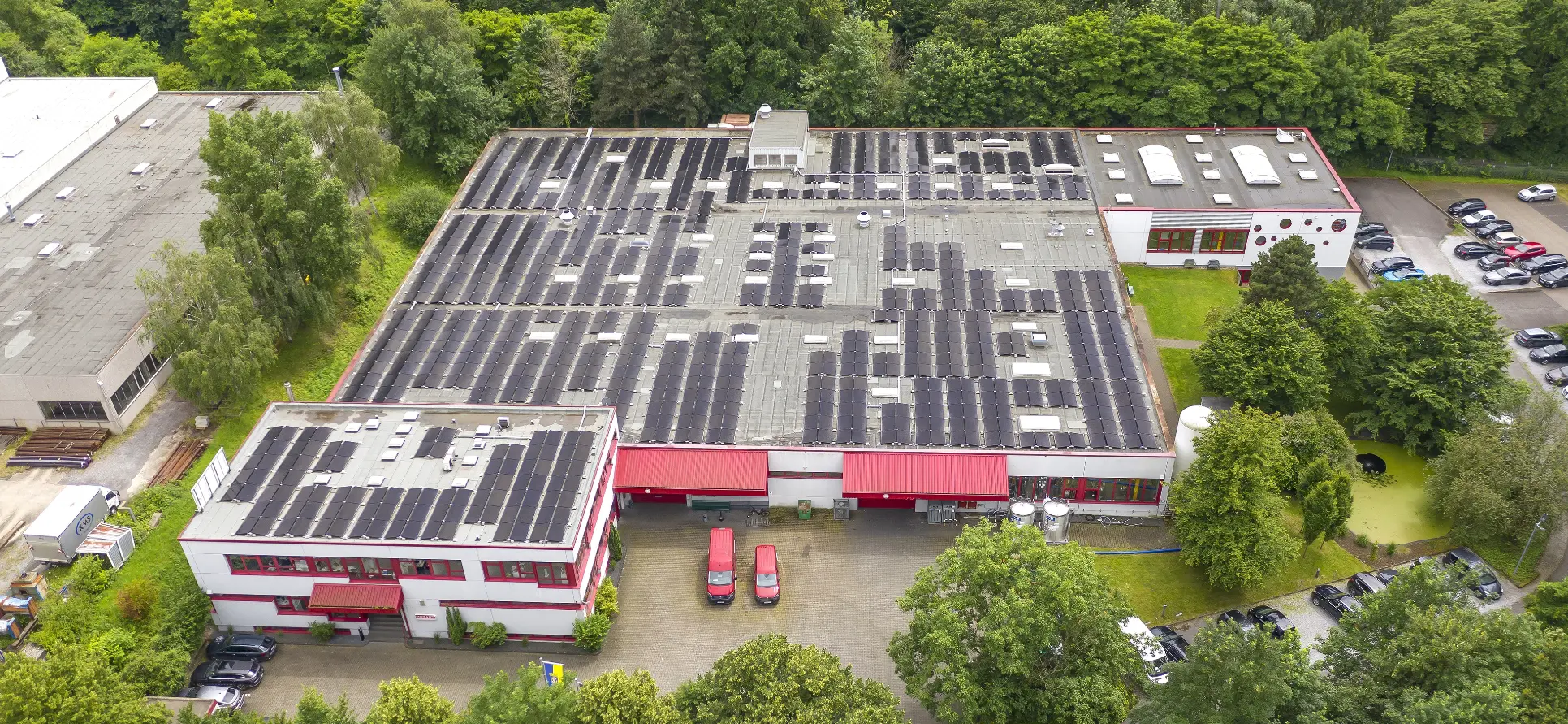
As one of the world's leading blade manufacturers, MOZART relies on Germany as a location of quality. State-of-the-art technology and precise manufacturing guarantee the globally recognized standard: “100% Made in Solingen.”
To maintain this standard, MOZART uses a certified quality management system in accordance with DIN EN ISO 9001.
Our manufacturing processes
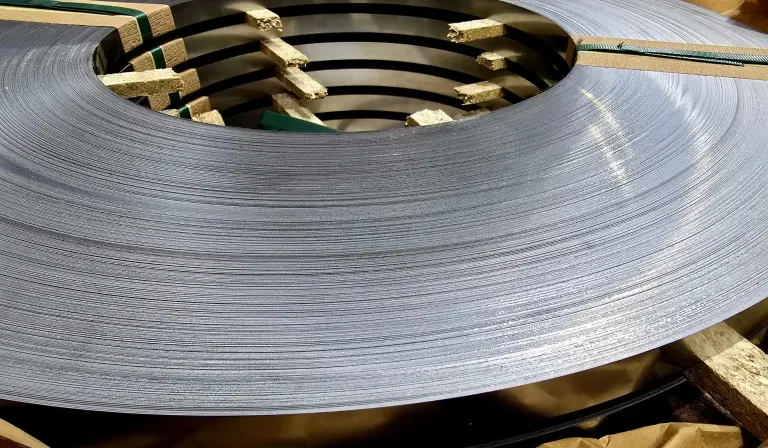
Strip steel
Strip steel is the raw material for our blades. During the incoming goods inspection, the surface, edge finish, straightness and metallography are checked in our own laboratory.
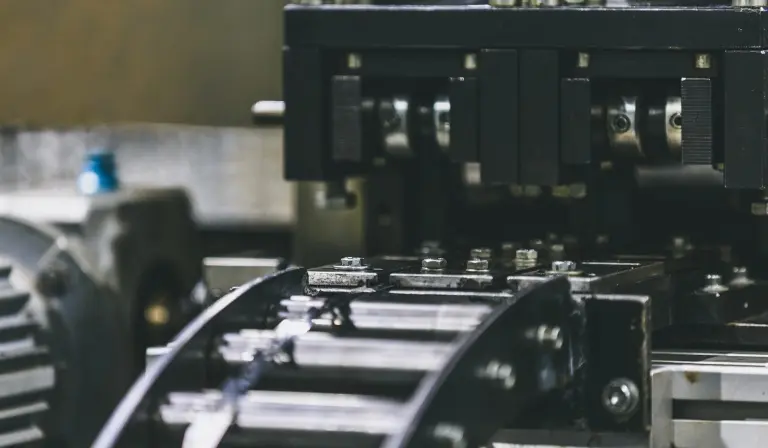
Punching
During punching, contours and hole patterns are punched out and predetermined breaking points and lettering stamps are added. An order-specific initial part approval is carried out with regard to geometry and design. In addition, ring-specific backlash samples are created.
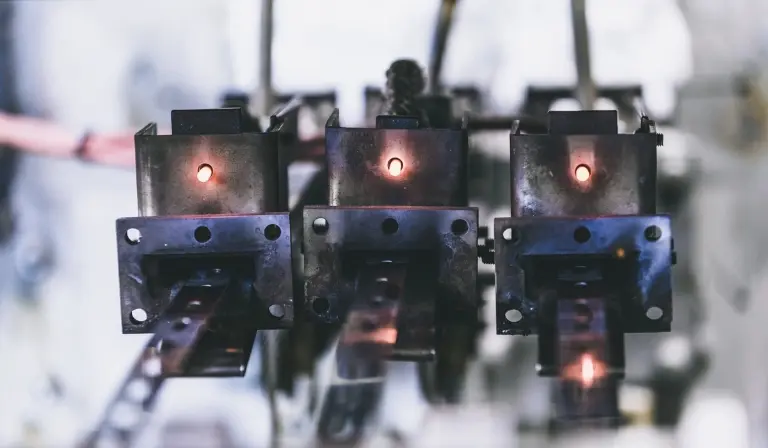
Hardening
The hardening process consists of the following steps: hardening, deep freezing and tempering. Hardness and distortion are continuously monitored throughout the entire process. In addition, microstructural analyses are regularly carried out in our in-house laboratory. If necessary, surface finishing such as painting, etching, or polishing is carried out after hardening.
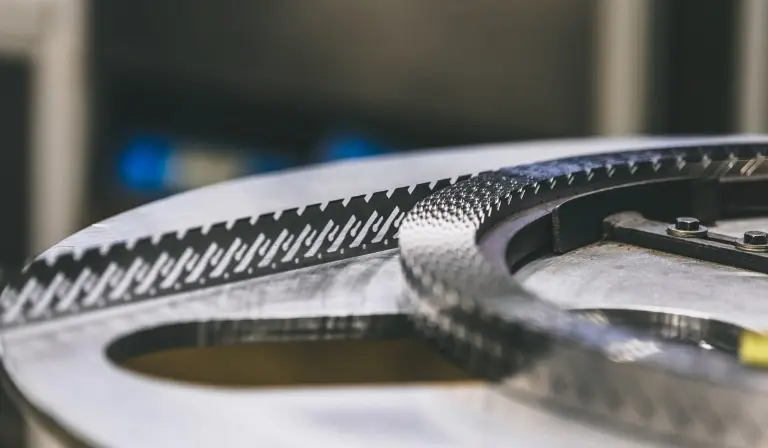
Grinding
Various methods are used for grinding. Straight grinding involves applying a straight grind to the upper edge, followed by the separation of the blades. Hook grinding is a plunge grinding method for machining concave contours; here too, separation takes place afterwards.
Three-hole grinding is used to grind both the top and bottom edges of blades in a single operation.
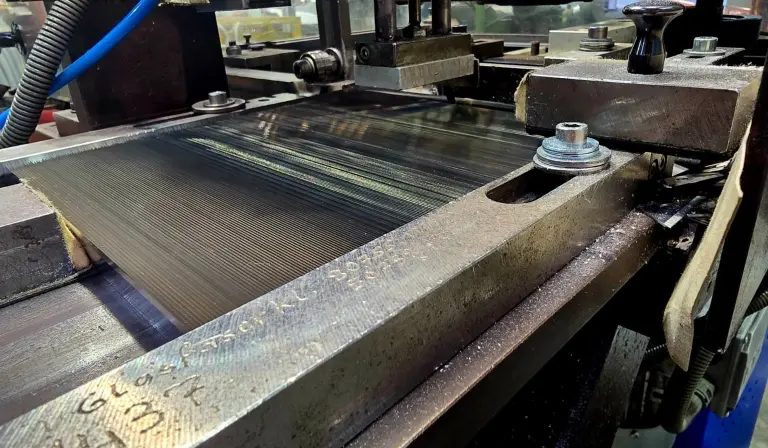
Breaking/separating
When breaking or separating, correct notching of the predetermined breaking point is crucial for a flawless breaking process. The workpieces are mainly separated after the grinding process.
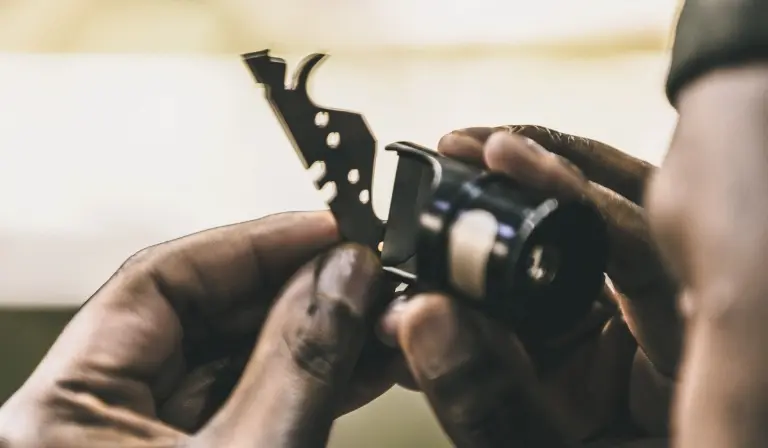
Structure and cutting analysis
Structure and cutting analysis are used for continuous quality control in all manufacturing steps to ensure that no errors are carried over into the rest of the production process. Structure and cutting analysis reliably guarantee that our high quality requirements are met.
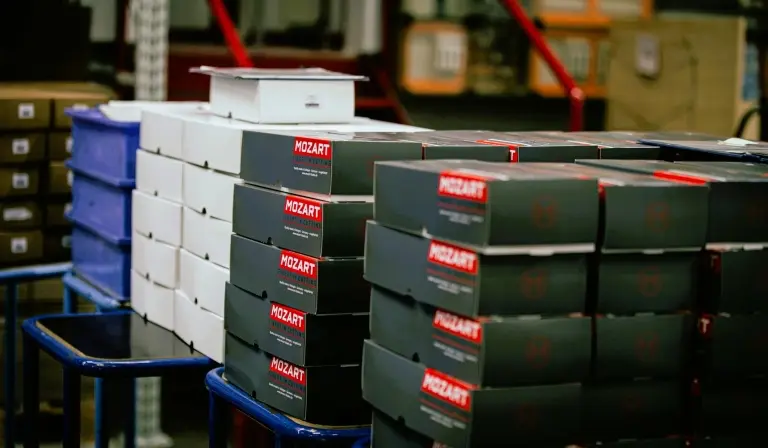
Packaging
When packing our products, we focus on providing optimal customer benefit. This includes ensuring that the blades are transported safely to the customer, but also that they can be handled safely during use. For several years now, Mozart has been committed to using sustainable packaging, avoiding plastic packaging wherever possible.
Materials management
We in the purchasing department at MOZART AG are responsible for ensuring that the quality of MOZART products always remains at the highest possible technical level. We therefore take responsibility for all purchased parts and services. We strive for a “zero defects” quality target, both internally and externally.
Our suppliers are an important factor in the success of our company.
To find out whether your products fit our requirements, please contact us directly


Compliance
MOZART AG is aware of their social responsibility. All those involved in the procurement process as intermediaries between their own company and suppliers in each of the supply markets bear a particular responsibility towards their own company, towards customers and suppliers, towards the environment and towards society.
The conduct of our company and our employees is guided in particular by the values of integrity and fairness. Therefore we accept the rules of the United Nations Global Compact and signed the Code of Conduct Association Materials Management, Purchasing and Logisticsis. This is a voluntary code that is intended to put substance behind the interest of the Association Materials Management, Purchasing and Logistics and its members in upholding fair, sustainable, responsible ethical principles of conduct.